

Projects
The Babine River Foundation supports research, stewardship, education and advocacy initiatives that help protect one of the world’s great wild steelhead watersheds.
Working alongside Indigenous communities, scientists, government agencies, conservation organizations, guides, and local residents, we help advance projects that improve our understanding of the river, inform management decisions, and support the long-term health of fish, wildlife, and communities throughout the watershed.
Our work includes the Angler Science Program, the Skeena Steelhead Economic Study, support for fisheries research and monitoring initiatives, contributions to the Lake Babine Fisheries Program, participation in grizzly bear research with BC Parks, watershed advocacy related to the Kispiox Timber Supply Review, and support for independent scientific studies examining river conditions and ecosystem health. We also help share the stories of the watershed through educational films, community outreach, and public engagement initiatives that connect people to the river and the landscapes that sustain it.
The projects below represent some of the ways we are contributing to the future of the Babine River.

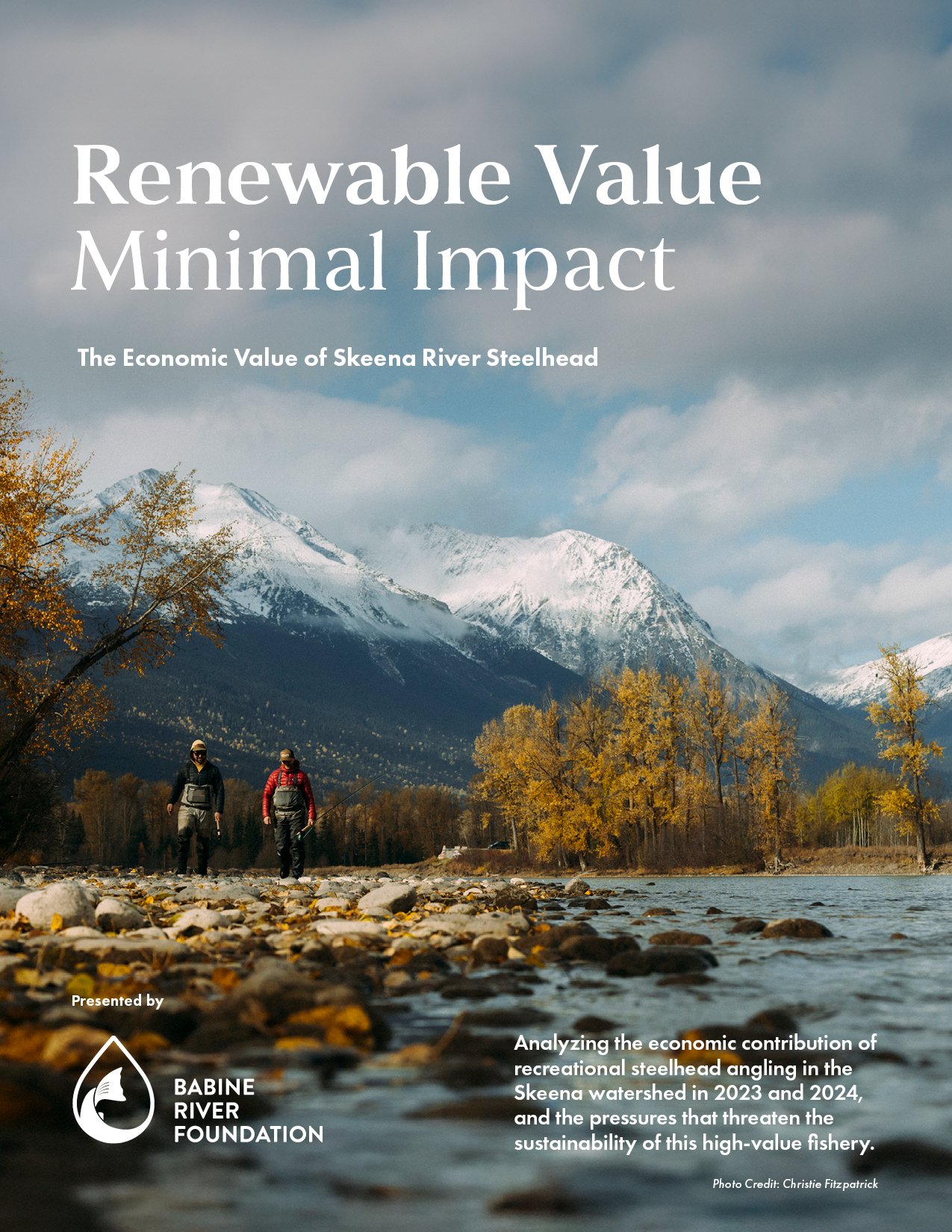
Economic Research Report
Renewable Value. Minimal Impact.
The Skeena Watershed is widely regarded as the premier wild steelhead fishery in the world, attracting anglers from across the globe and supporting jobs, tourism, and local businesses throughout Northern British Columbia. To better understand the value of this resource, the Babine River Foundation and its partners commissioned a comprehensive economic study conducted by Big River Analytics.
The research found that Skeena steelhead angling generates approximately $33 million in economic output, $16 million in GDP, $11 million in labour income, and supports 291 full-time jobs across British Columbia. Guided angling in the Upper Skeena accounts for more than 60% of the fishery's economic contribution within the North Coast–Nechako region, making it a critical driver of the regional economy.
The study also highlights the extraordinary value generated through a catch-and-release fishery, where every 27 steelhead caught and released supports one local full-time job. It further examines growing threats to steelhead survival, including commercial fishery bycatch and competition associated with large-scale pink salmon production in the North Pacific.
By advancing credible economic research, the Babine River Foundation is helping ensure that conservation and fisheries management decisions recognize the full ecological, social, and economic value of wild steelhead.
Babine Angler Science Project
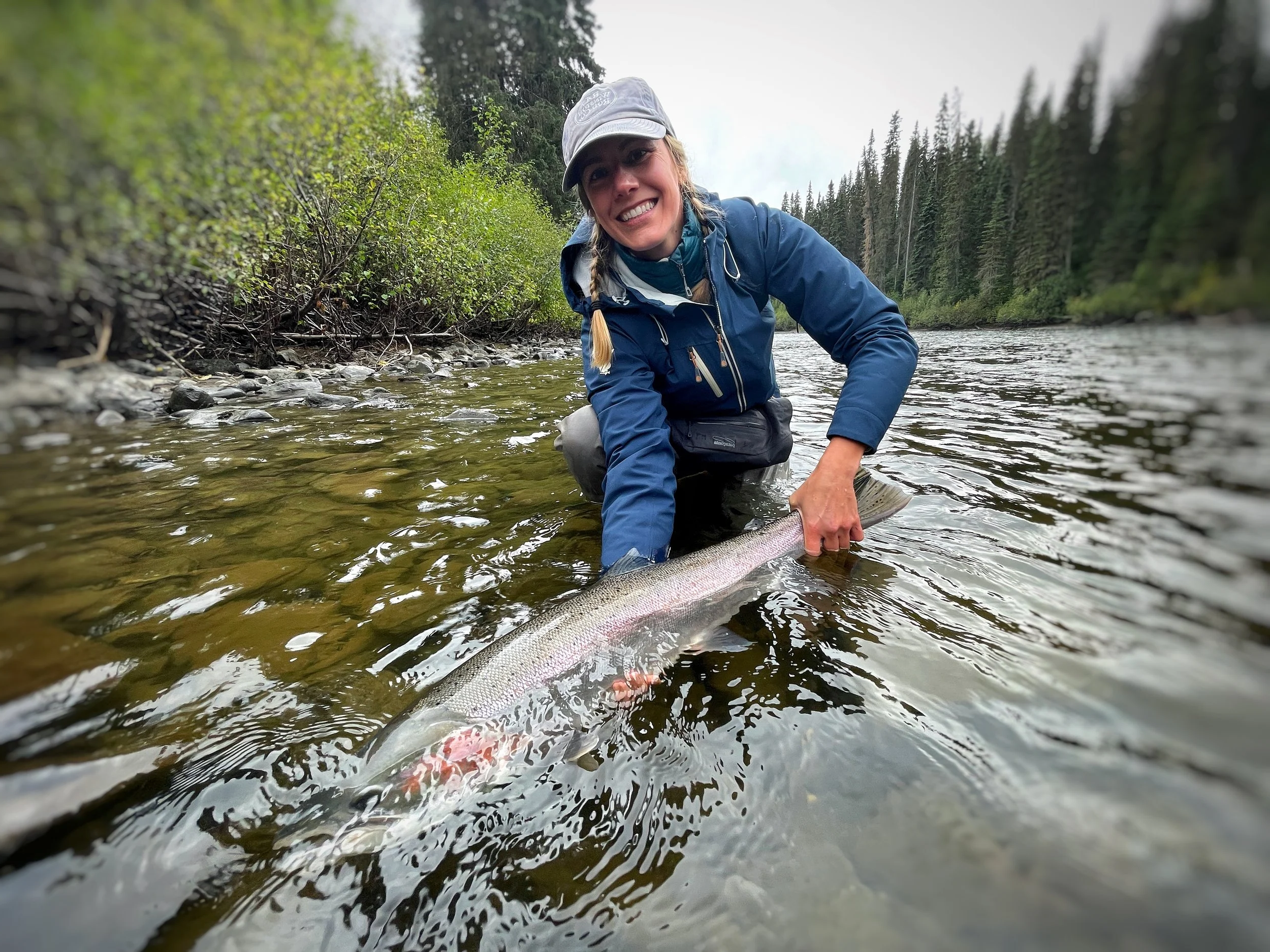
In partnership with The Conservation Angler, the Babine River Foundation launched a pilot Program to record basic information from wild steelhead encountered during normal catch-and-release angling on the Babine River. Working with guides from Babine Norlakes Steelhead Camp and Silver Hilton Lodge, the 2025 pilot recorded the length and sex of 98 steelhead.
The pilot is exploring how consistent observations collected over time may contribute to a better understanding of Babine River steelhead. The program demonstrates how anglers, guides, and lodges can play a direct role in building scientific knowledge, long-term monitoring, and watershed research, while keeping fish handling to a minimum.
Babine Watershed Monitoring Trust
The Babine River Foundation has directly supported over 25 projects and $400,000 towards the Babine Monitoring Trust. These projects and reports can be found on the Skeena Knowledge Trust Portal.

photo: Ken Morrish
Wild Salmon Centre
The Wild Salmon Center in Portland, Oregon sees the Skeena Watershed as one of the last salmon strongholds of the North Pacific. The Center identifies the strongest wild salmon rivers in the Northern California to Alaska and the Russian Far East to Japan to the geographies. Through local alliances, the Center leverages its scientific, political, legal, fundraising and communications expertise to secure areas under threat.

photo: Ken Morrish
SkeenaWild Conservation Trust
Since 2007, SkeenaWild Conservation Trust has been engaged in creating a global model of sustainability on the Skeena. Working with governments, First Nations, local communities and individuals, the Trust seeks to protect habitats and species, conducts scientific research, collaborates to manage sustainable fisheries, and engages with local communities to plan for the long term.