
Renewable Value Minimal Impact
The Economic Value of Skeena River Steelhead
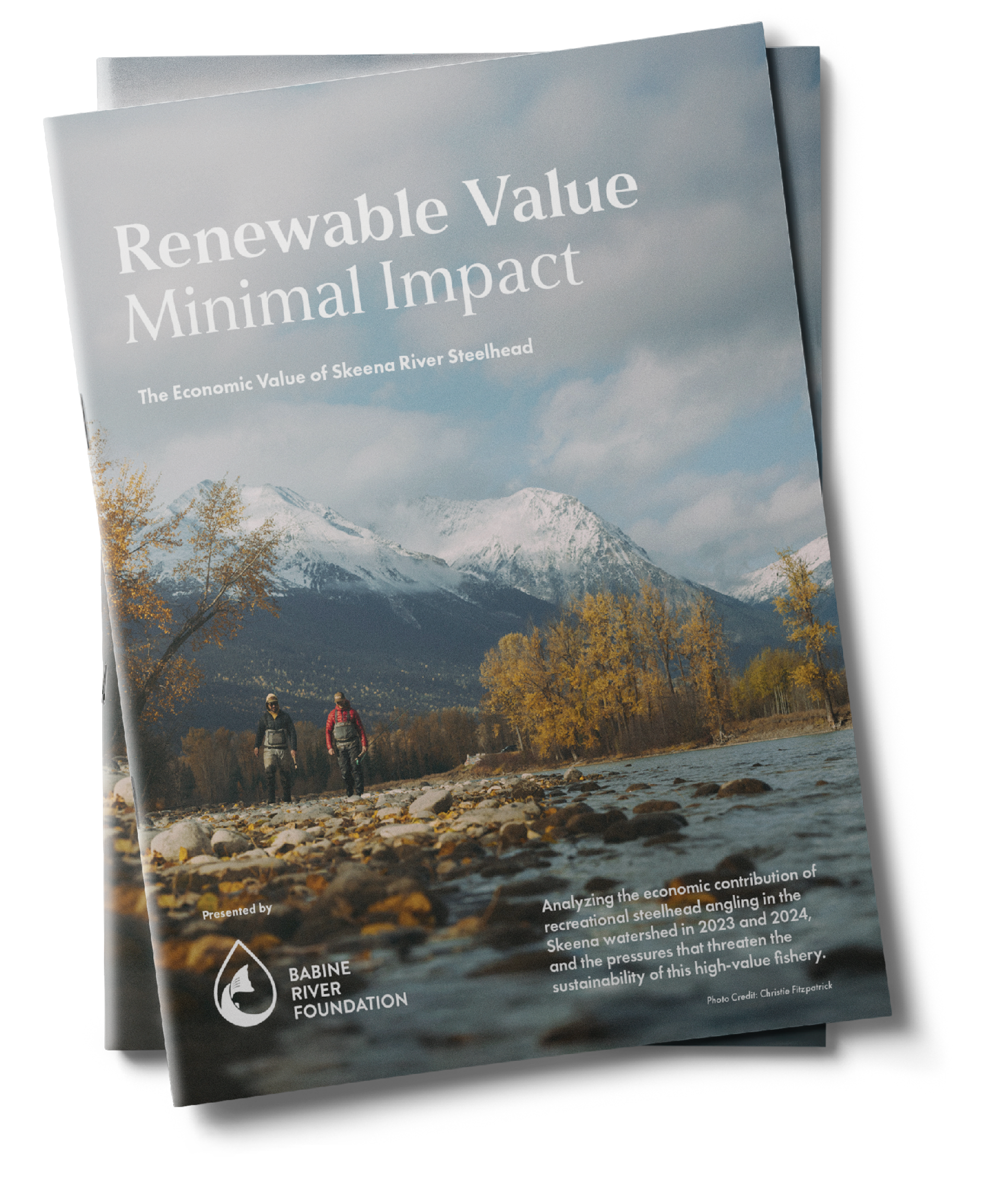
Analyzing the economic contribution of recreational steelhead angling in the Skeena watershed in 2023 and 2024, and the pressures that threaten the sustainability of this high-value fishery
Download the full report to access the complete analysis, data, and key findings. This document outlines the economic impact, underlying drivers, and implications in clear, practical terms. If you’re evaluating the broader significance or looking to inform decisions, this provides the full context.
A Renewable Economic Driver for Northern British Columbia
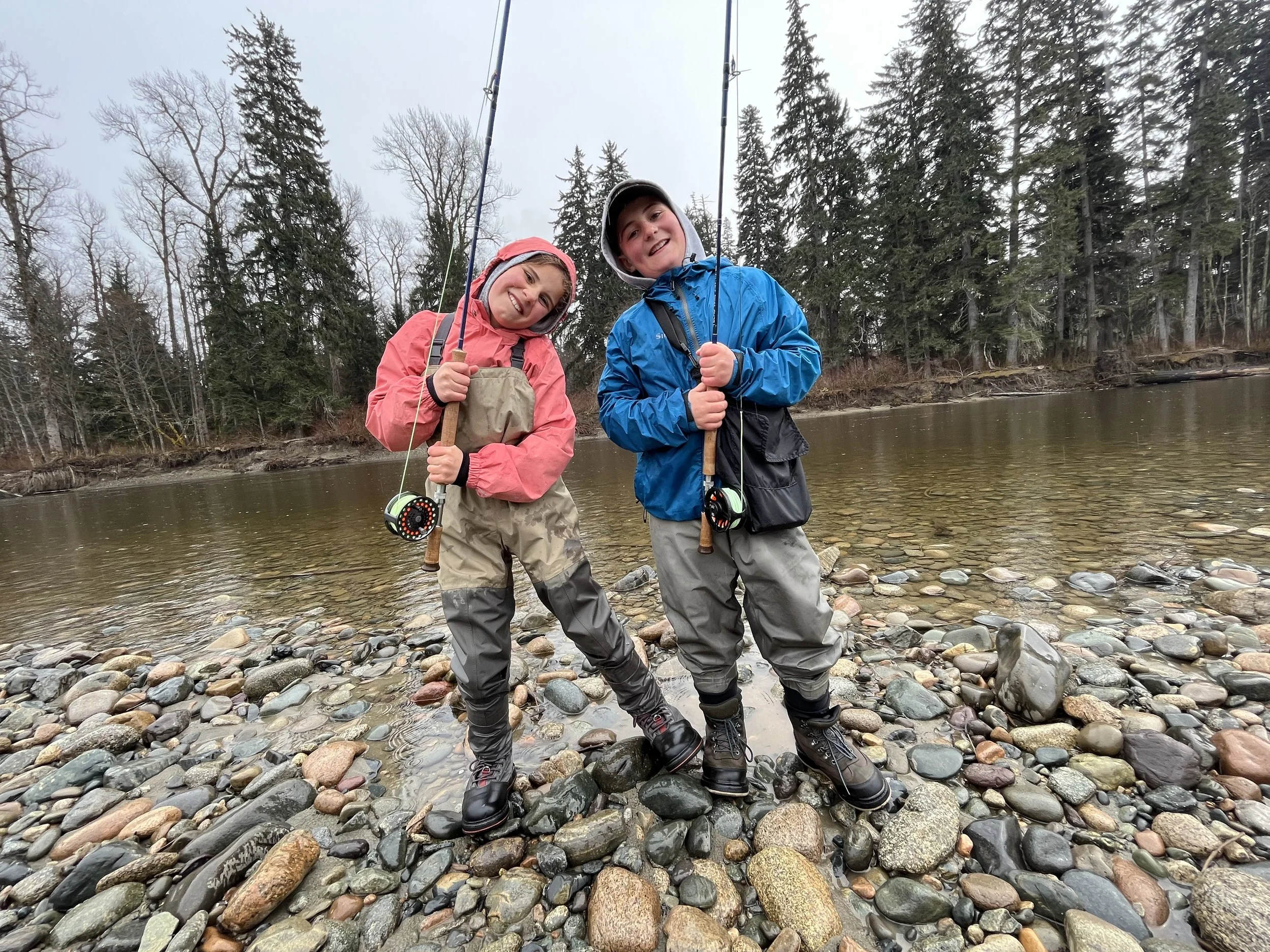
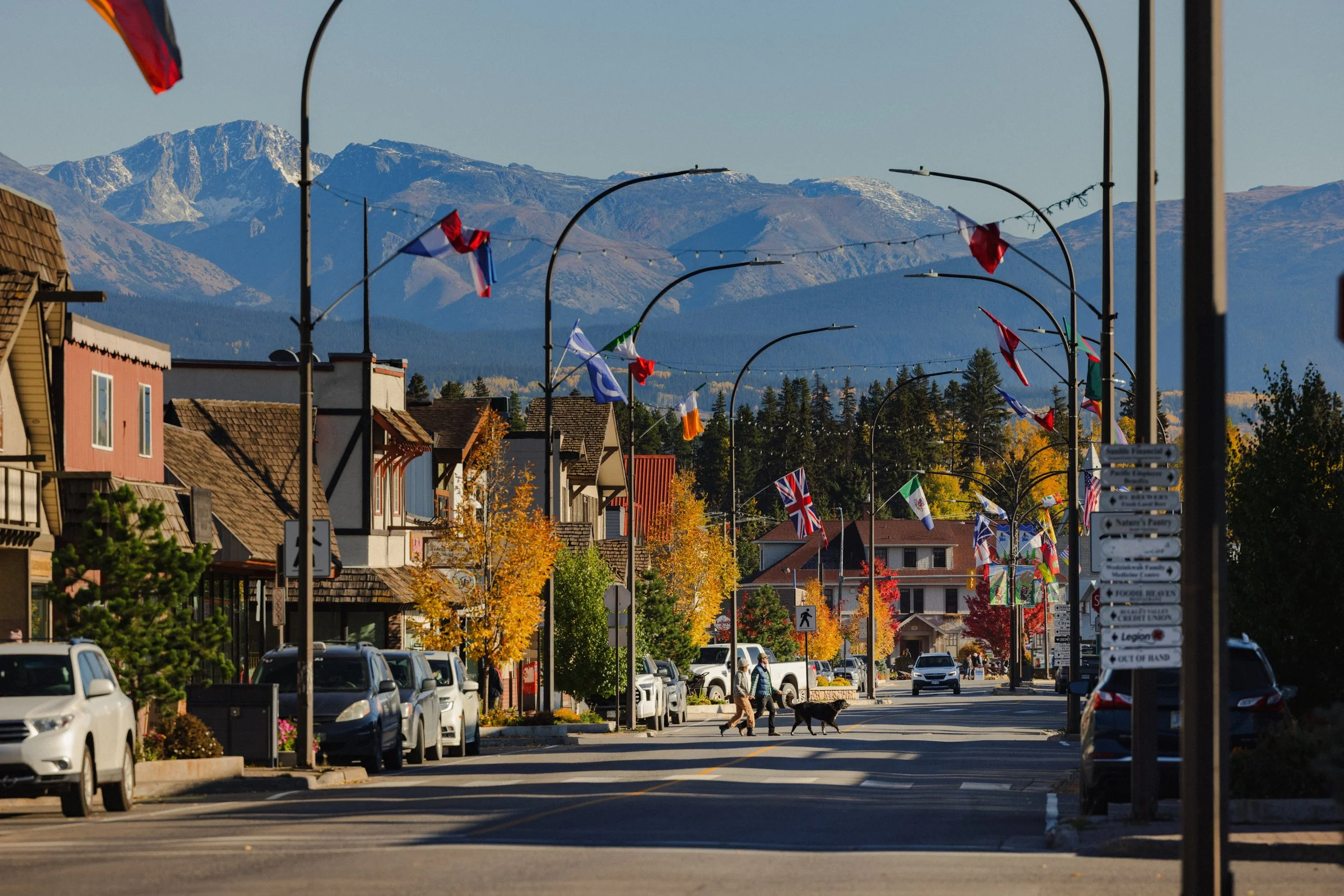
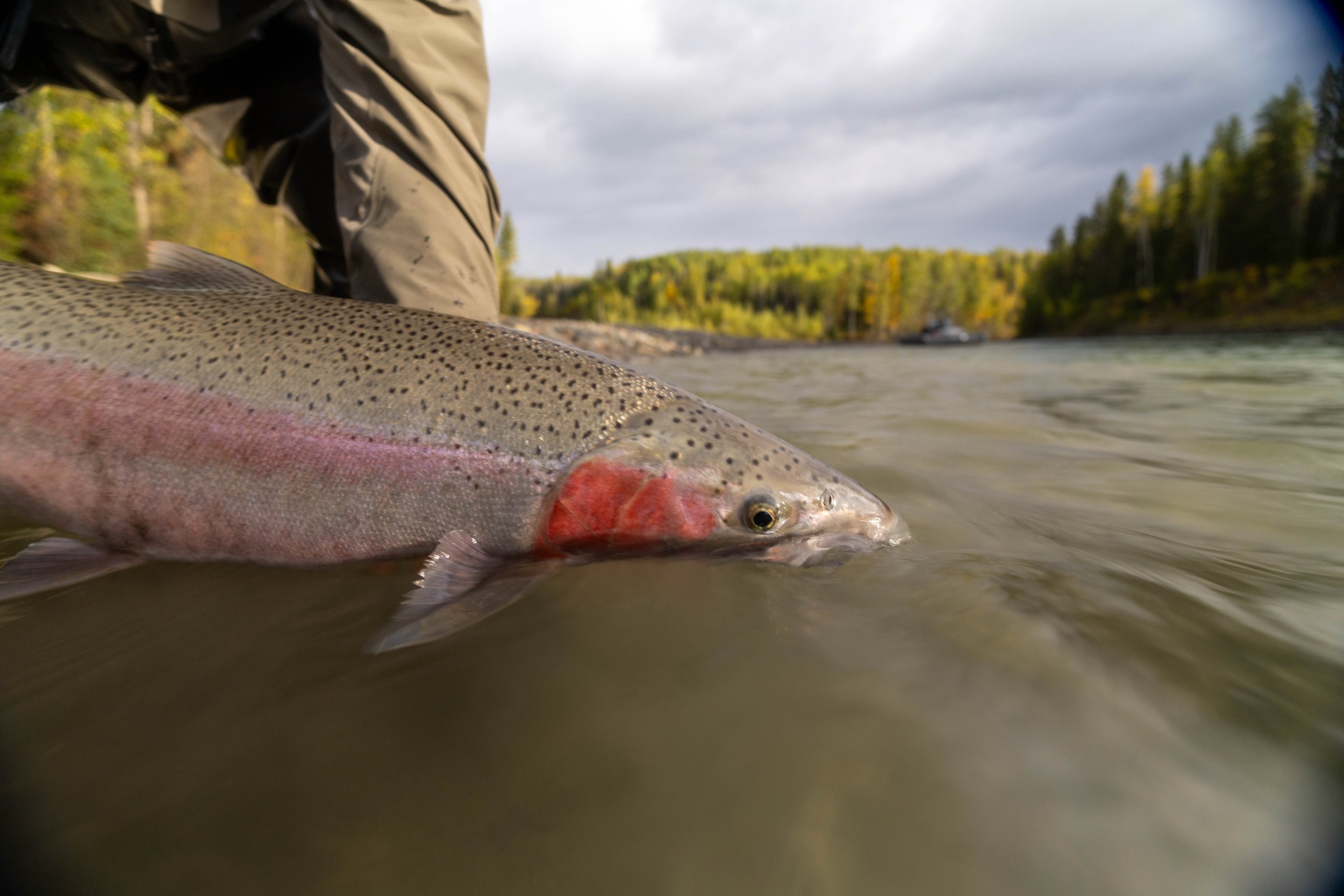
The Skeena River watershed is home to the most productive wild steelhead fishery in the world, drawing anglers from across the globe to local communities in the North Coast-Nechako region. The recreational fishery functions as a renewable resource, generating jobs, income, and economic activity year after year without depleting the underlying stock.
The Economic Contribution in the North Coast-Nechako Region
Skeena steelhead angling is a major economic driver in Northern British Columbia, supporting economic activity and jobs in local communities. Guided angling in the Upper Skeena watershed forms the core of the fishery, accounting for over 60% of total economic contributions in the North Coast–Nechako region.
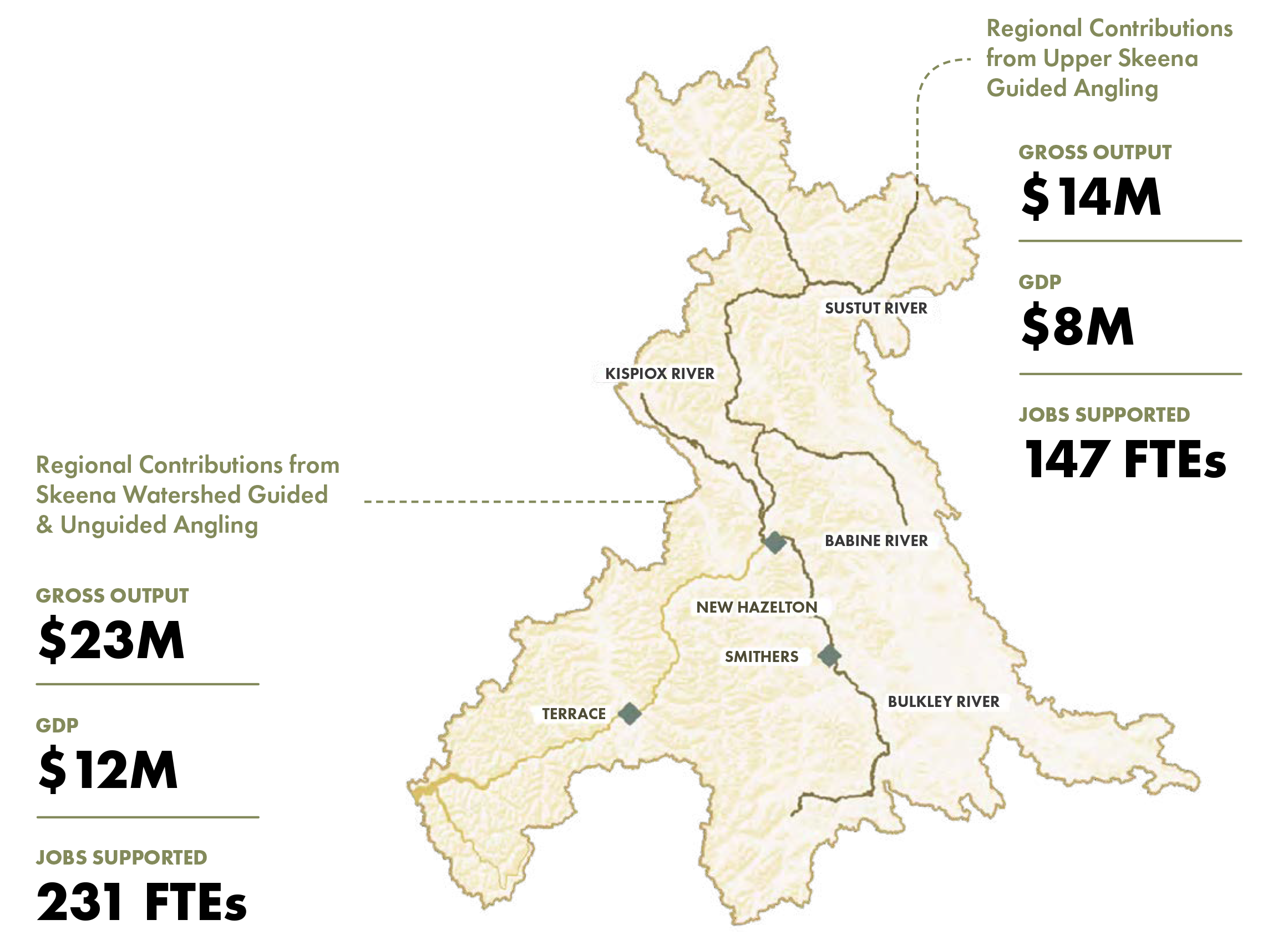
Between 70% and 80% of provincial economic activity stays in the North Coast–Nechako region. Across BC, steelhead angling in the Skeena watershed contributes approximately $33 million in gross output, $16 million in GDP, and $11 million in income, and supported 291 FTEs.
Regionally Concentrated Contributions

High Economic Return, Minimal Biological Impact
The Skeena steelhead fishery is exclusively catch-and-release. Anglers pursue, hook, and release fish, generating substantial economic activity while returning nearly all steelhead to continue their migration and spawn. While incidental mortalities occur, the fishery exhibits an exceptionally high ratio of economic contribution to biological cost compared to other activities affecting steelhead.
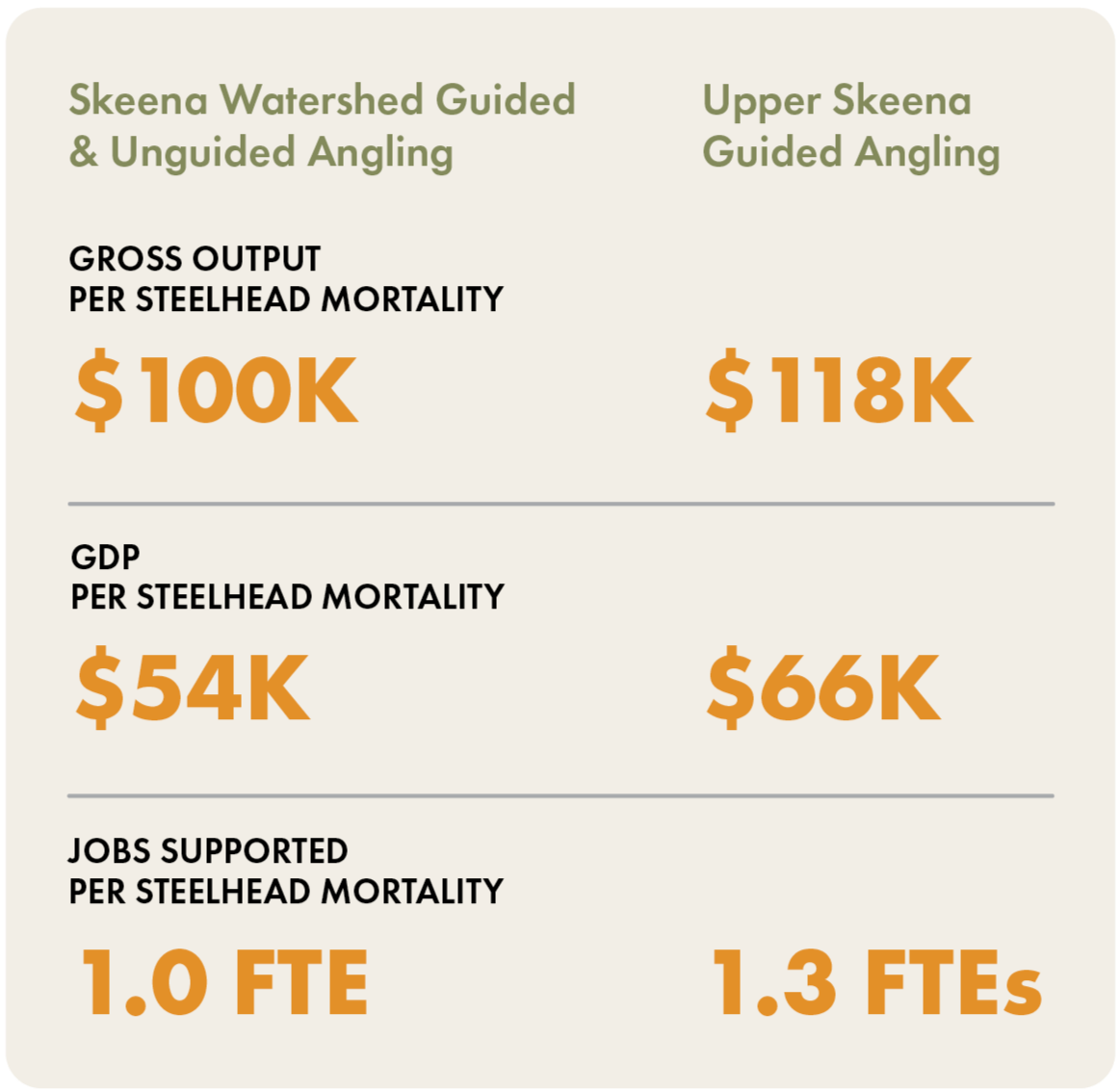
Economic Contribution per Steelhead Mortality in the Region
Assuming a standard 3.5% catch-and-release mortality rate, guided angling in the Skeena results in fewer than 200 steelhead mortalities. On average, each steelhead mortality corresponds to one local full-time job.
These per-fish metrics represent average economic activity associated with angling effort rather than an implicit “price” per fish, and serve as a benchmark for comparing economic and biological trade-offs across activities that affect steelhead populations.
In the Upper Skeena, where destination lodges command premium rates, per-steelhead economic contributions are approximately 20% higher than watershed-wide averages.
Economic Contribution per Steelhead Caught and Released in the Region
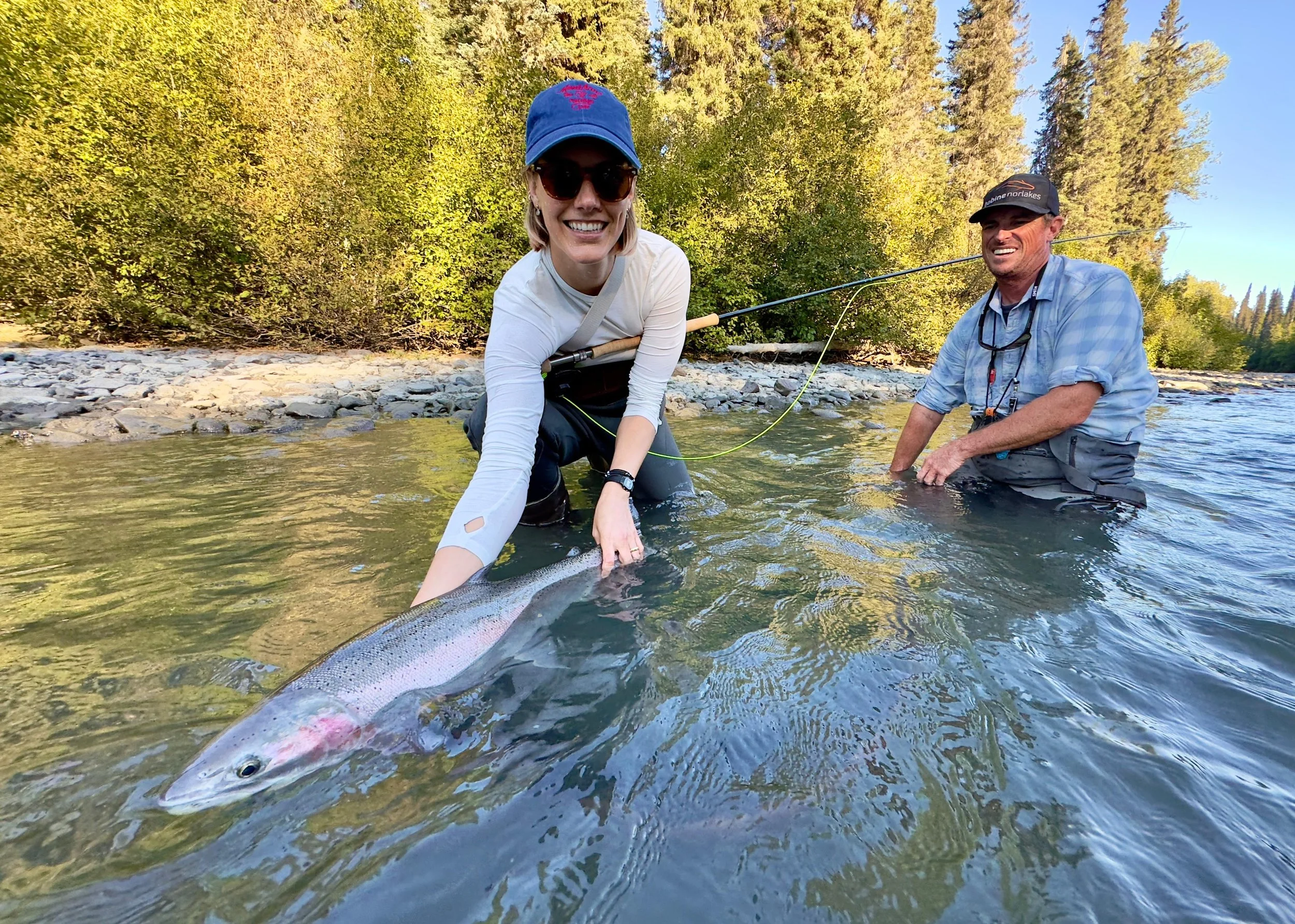
Every single Skeena steelhead caught and released by guided anglers is associated with approximately $3,500 in gross output, $1,900 in GDP, and $1,300 in regional income. On average, 27 steelhead caught and released correspond to one local full-time job.
Protecting a Renewable Resource
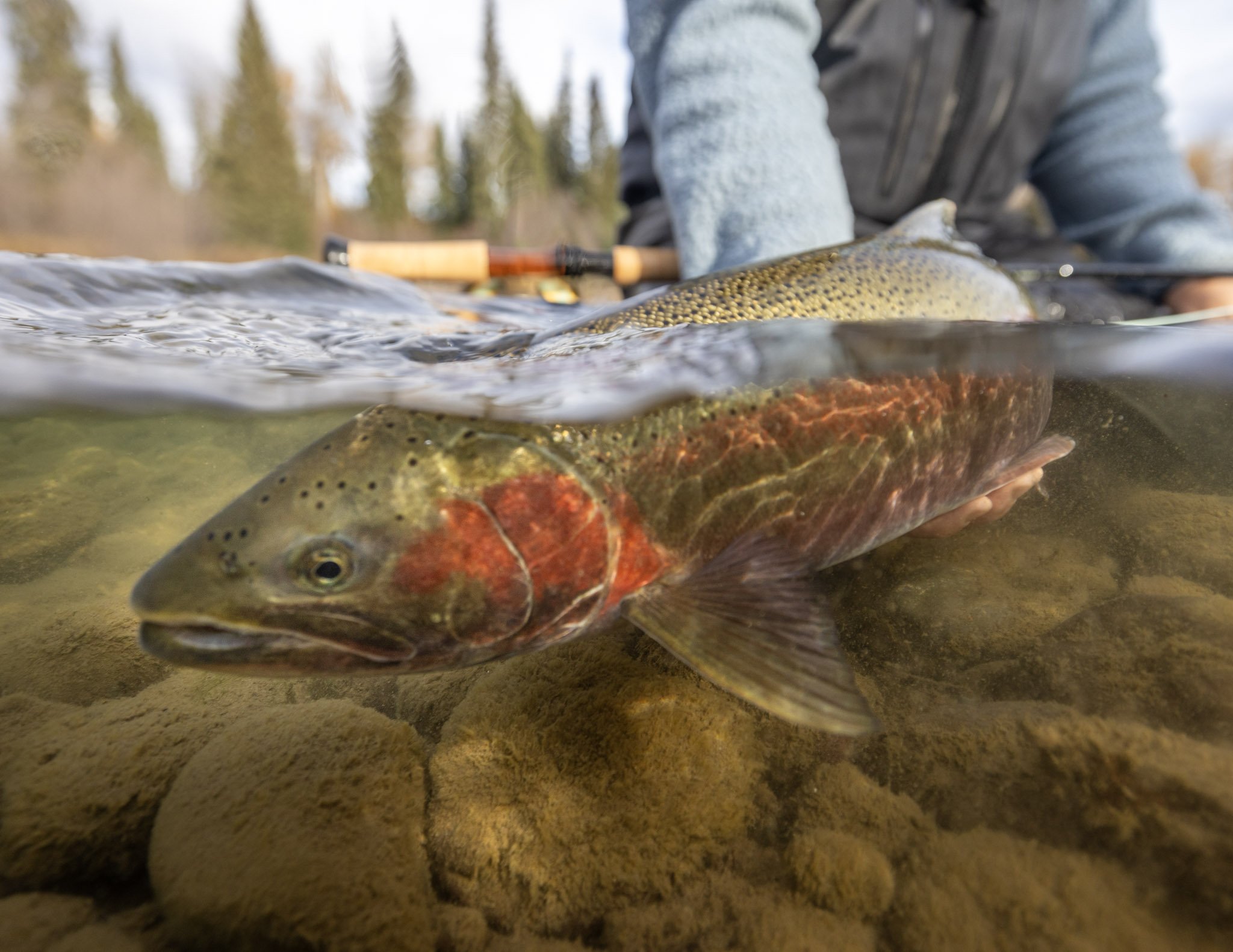
The economic value of the Skeena steelhead fishery depends on fish returning to the watershed. External pressures, including commercial bycatch in ocean fisheries and competition from hatchery-augmented pink salmon, reduce steelhead runs before they reach the watershed. These pressures threaten both the biological sustainability of Skeena steelhead stocks and the regional jobs that depend on it.
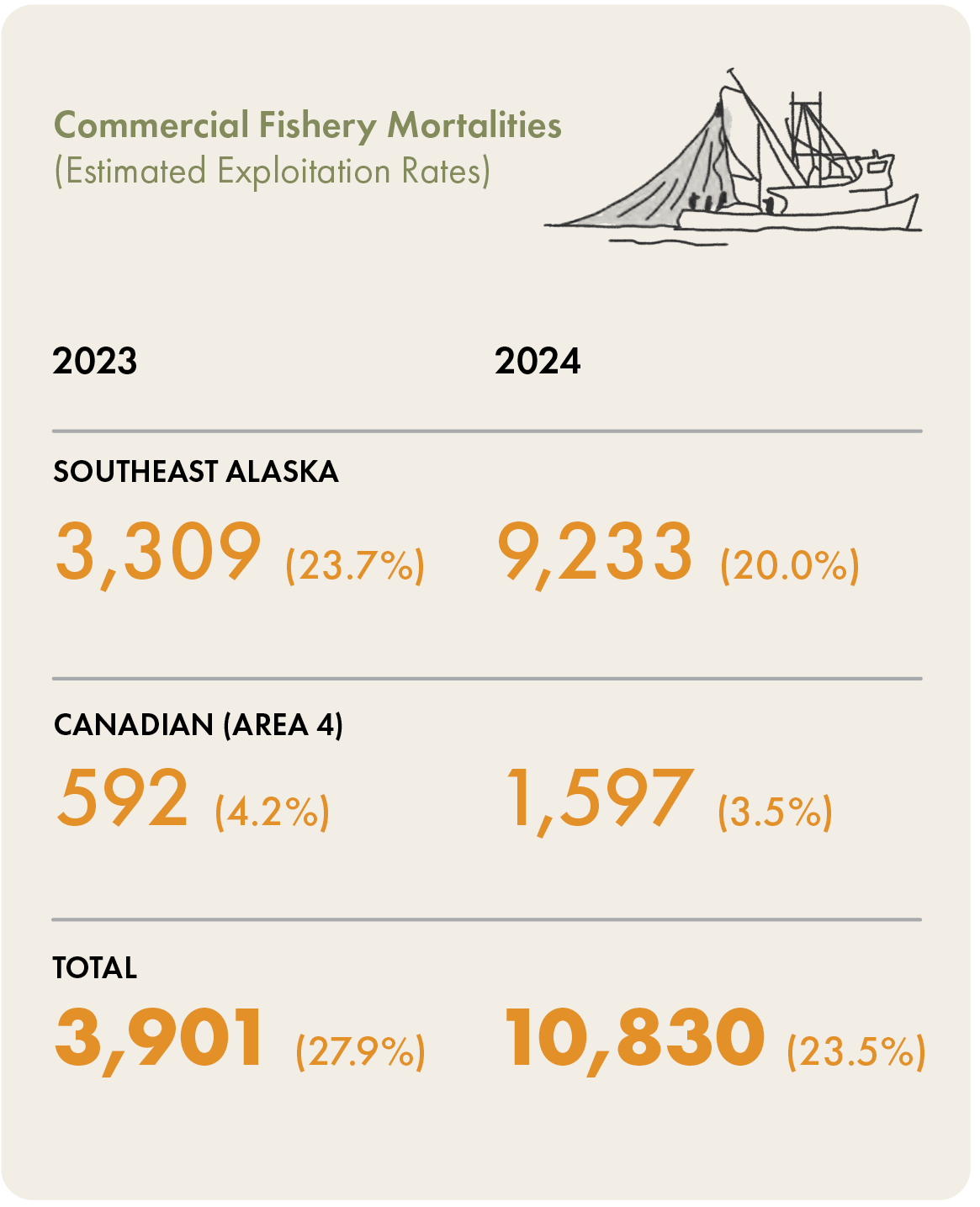
Estimated Steelhead Mortalities in Commercial Fisheries Bycatch
Steelhead migrating home to the Skeena pass through commercial salmon fisheries in southeast Alaska and Canadian waters. Although sale is prohibited, thousands of Skeena steelhead are caught as bycatch, and most do not survive.
These mortalities are lower-bound estimates, not including unreported drop-outs, delayed mortality, illegal and unreported catch, or interceptions in other fisheries.
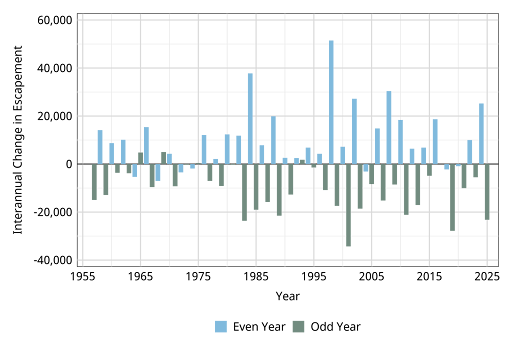
Steelhead face increasing competition for food in the North Pacific Ocean, partly driven by large-scale hatchery production of pink salmon. Pink salmon abundance follows a strong two-year cycle, with dramatically higher numbers in odd years.
Since 1990, odd-year pink salmon abundance has exceeded even-year abundance by 136 million fish. Skeena steelhead, not known for natural biennial cycles, show the opposite pattern, with 14,500 fewer returns in odd years than in even years.
Ocean Competition
Conclusion
Protecting Skeena Steelhead Means Protecting Jobs in Northern BC
The recreational steelhead fishery generates substantial, sustainable economic value for Northern British Columbia, built on a renewable resource. Guided angling in the Upper Skeena watershed delivers exceptional returns while operating within a catch-and-release framework that minimizes biological impact.
Ocean-based pressures pose the largest risk to steelhead populations and the regional economy they support, increasing the likelihood of conservation-based closures and placing approximately $23 million in regional economic output and 231 local jobs at risk. Modest adjustments to commercial fisheries and pink salmon hatchery practices could improve conservation outcomes at substantially lower economic cost than restricting the recreational fishery.